
The daily routine is probably the same for many dogs: not much happens at night, people are nearby, so dogs can calmly close their eyes and truly sink into deep sleep. The pack is together and – if you're very lucky – you can even lie in the bedroom and listen to the breathing of your "pack members." This is incredibly calming, gives the dog a sense of security, and can help dogs sleep through the night or sleep alone. But where should a dog sleep, or what is a good sleeping place for your dog at night? And above all:
What can I do if my dog doesn't sleep through the night?
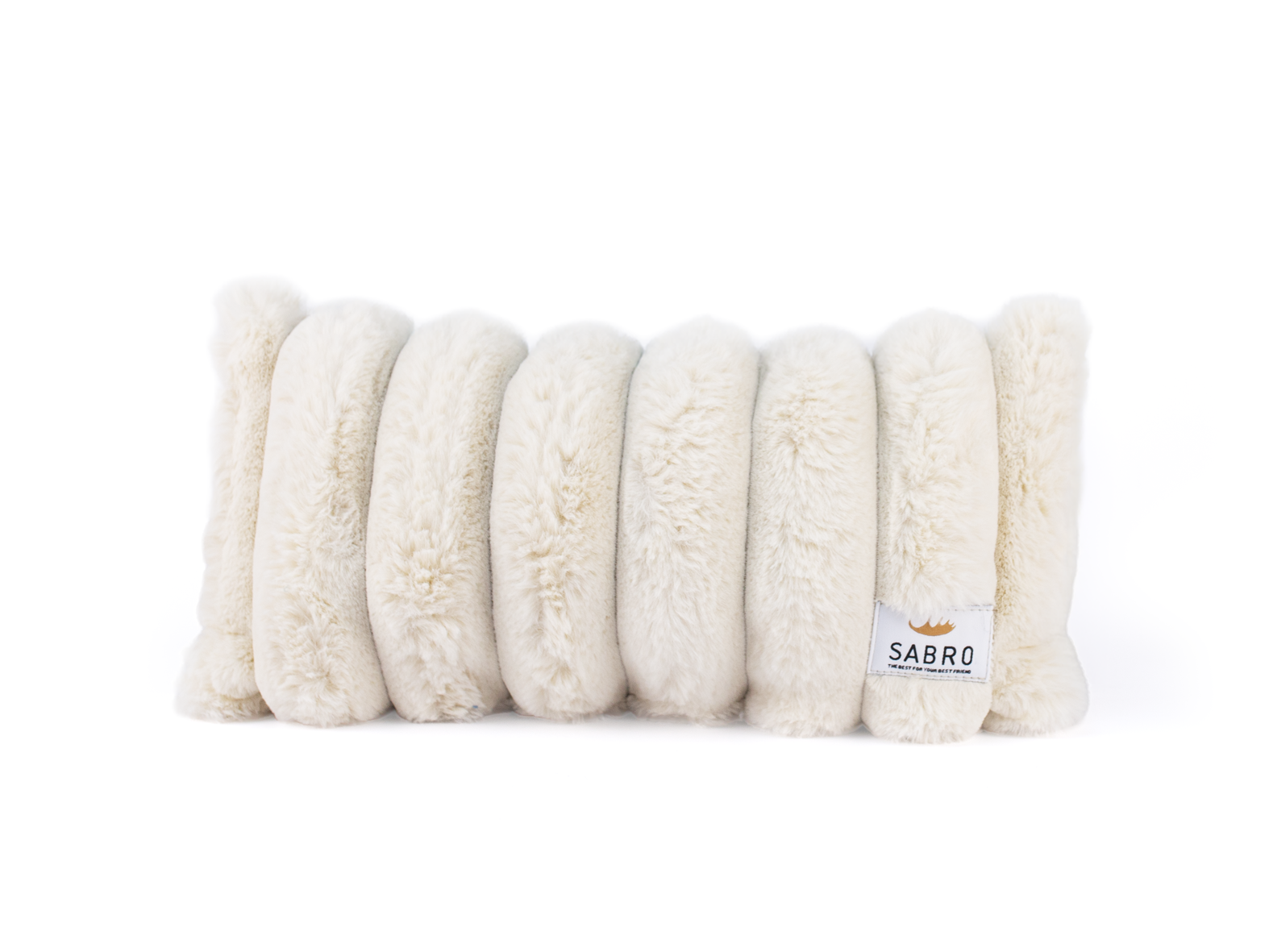
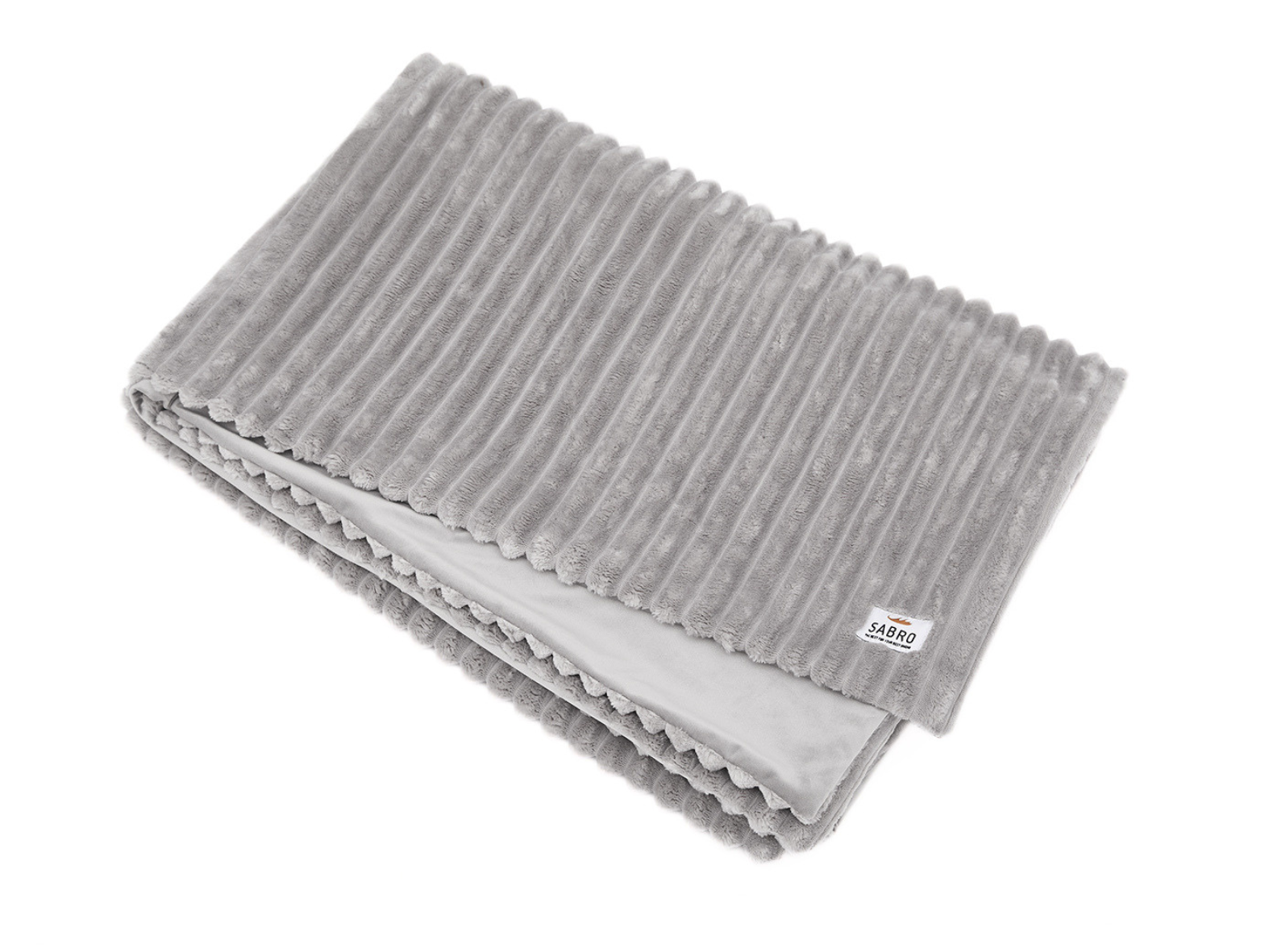
The next morning, daily life begins, and for many dogs, it becomes harder to settle down. That's why they often just doze where we humans are during the day. To meet their need for rest, you should create a comfortable retreat for them – ideally with an orthopedic dog bed that also optimally supports their joints and muscles.
You can often recognize a dog's light sleep or dozing by its body posture. In deep sleep, the dog's body is stretched out completely, usually easy to observe when your dog is lying in its sleeping place at night. There is hardly any body tension. When dozing, the dog often has its eyes closed, but is curled up – ready to open its eyes at any time to immediately register any deviations in the routine.
Enough sleep is very important for adult dogs and puppies!
Dogs use sleep several times a day, primarily as a recovery phase to process experiences and gather new strength. And that's a good thing, because plenty of sleep allows dogs many positive qualities:
-
Sufficient sleep in a suitable dog bed strengthens the dog's immune system and makes it less susceptible to many diseases.
-
Dogs that regularly rest and sleep are much more relaxed in their demeanor and behavior.
-
If a dog sleeps the appropriate amount for them, they learn faster and generally have visibly better motor skills.
Every dog has to re-learn how to sleep properly
The problem: many domestic dogs are sometimes no longer accustomed to these natural resting phases and are active not only at night because humans are active too, or because humans think they have to keep their dog occupied. These dogs practically have to be re-trained to rest more. A shared nap with your four-legged friend can work wonders and show the dog that rest periods are very positive. And you yourself also benefit from the occasional power nap.
That's a good keyword: in contrast to us humans, who use the night to sleep and are active during the day, dogs use longer rest phases repeatedly throughout the entire day and night. The reason for this lies in the environment and their natural instinct: while we sleep in the dark and quiet bedroom at night, the dog is exposed to constant activities happening around them. And as a watchful pack animal, they are more attentive even when dozing and resting than we are.
How to recognize whether your dog is dozing, resting or in a deep sleep
As watchful pack animals, it's innate for dogs to be wide awake instantly when something happens. Therefore, they often tend to doze and scan their surroundings with their ears and nose. This can be recognized by the fact that the dog has its eyes closed, but breathes normally and neither whimpers nor twitches or anything similar.
When a dog is resting, it usually has its eyes open. It looks around, but lies calmly on its dog bed, dog mat, or in its dog basket and is not easily disturbed.
A dog's true sleep phases resemble those of humans: after the passive falling asleep phase, where heart rate and breathing slow down and blood pressure drops, comes the active REM phase (Rapid Eye Movement), in which we and dogs process the day's experiences. When the dog twitches or whines with closed eyes, it is in the deep sleep phase and dreaming. These are the times when it's almost impossible to look away as an observer, because it just looks too cute. While in humans the REM phase makes up about a quarter of sleep time, in adult dogs it is only ten percent, and slightly more in puppies. Therefore, they need more shorter sleep phases than us.
Tests with mice, dogs, and humans, by the way, showed identical patterns with too little sleep: first, everyone was over-excited, then less concentrated and clumsier, followed by irritability and initial symptoms of illness, which could eventually become chronic.
The optimal sleeping place for your dog offers protection and little distraction
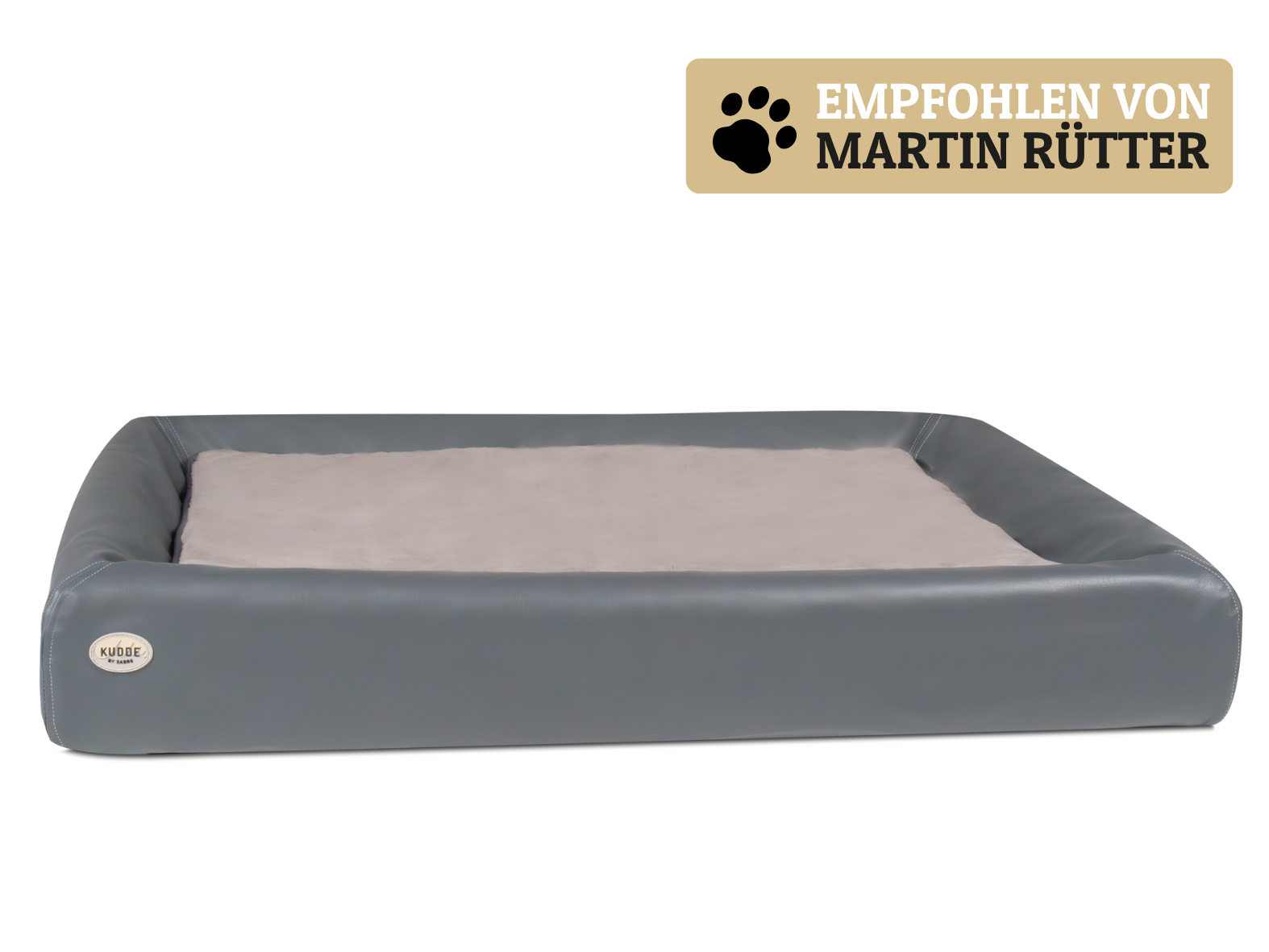
The natural need for sleep in dogs is shaped by experiences in nature. Wolves, for example, dig hollows into which they lie down to have a feeling of security and protection. Our Kudde dog bed, for instance, is designed precisely after these wolf hollows. But good sleep also requires the optimal sleeping place. Since dogs are pack animals, they don't like to sleep alone. Nevertheless, the dog bed should not be in the middle of the room to ensure enough peace and quiet.
-
A location against a wall is recommended, far enough from active two-legged creatures, but still allowing the dog to keep everything in view to react quickly.
-
The dog bed should not be exposed to direct sunlight or drafts to rule out potential illnesses from the outset. The often-cited "dog in front of the heater" is also a no-go when choosing a suitable location. It can quickly get too warm for the dog near a heater, which impairs its rest and sleep phases.
-
An optimal sleeping place is one that is not directly next to a door through which "the pack" constantly has to pass, such as a hallway door or the front door. The dog simply cannot find real peace there.
Our Top Tips for Better Dog Sleep
Tip 1: The dog should never lie on a cold and hard floor to avoid joint problems. Every dog needs a thick dog mat, a dog basket with a mat, or a real dog bed that insulates against cold from the floor to sleep well. If the dog bed has a layer of viscoelastic memory foam, like the Kudde, the weight is evenly distributed when lying down and supports muscle relaxation. It is also important to note that the sleeping place is truly large enough. If it isn't, the dog will get up during phases when it wants to sink into deep sleep and lie down in front of it to stretch out properly.
Tip 2: During the hours when the dog is not resting or sleeping, there should always be sufficient activity times. Dogs are also creatures of habit, so even a regular daily walk before work and after "evening television" can lead to better sleeping behavior in the dog. Both walks should be long enough, depending on the dog's age and activity needs, to truly tire them out, and ideally take place off-leash.
What you can do if your dog pants a lot at night
Panting is completely normal for dogs; it helps them lower their temperature since they don't sweat. If your dog pants at night, it's natural to worry. Reassurance first: short-nosed breeds (Pugs, Pekingese) and large dog breeds pant more at night because their anatomy requires more time to lower their body temperature. If you feel the panting is no longer normal, keep an eye on your four-legged friend and, if necessary, consult a vet, as panting can also be a symptom of an illness. However, it's also possible that the environment is responsible. Check the following points:
- Is the room temperature very high due to strong heating? Or is your dog lying near a fireplace, heater, or another heat source? Eliminate the cause of the heat and observe if your dog pants less afterward. A cooling mat on warm days can also reduce panting.
- Are you often out with your dog shortly before resting, and are they very active during this time? Or do you feed them late in the evening? Shift activities or feeding earlier in the day and see if your dog pants less at night and sleeps through.
- Is your dog stressed, for example, because it's New Year's Eve or they got scared by police sirens? Dogs pant more than usual under stress. This, in turn, can lead to your dog not sleeping properly at night.
Why your dog sometimes sleeps with open eyes
Don't worry if you notice your dog seemingly sleeping with open eyes. In this case, they are only dozing and keeping an eye on their surroundings to protect their pack in case of danger. This type of dozing is especially common in hunting dogs. Only very few dogs truly suffer from epilepsy or sleep apnea, which should be examined by a veterinarian.
In addition, dogs have a nictitating membrane (a kind of third eyelid that is supposed to protect the eyes from drying out) which they can pull down like a roller blind, leaving their true eyelids open. This makes it only appear as if they are sleeping with open eyes.
You do not need to wake your dog when he is sleeping with open or half-open eyes.
What if the dog sleeps too much?
Very important: there is a huge difference between sleeping and lethargic lying. If the dog appears more sluggish and lethargic than tired or sleepy, you should first check its drinking and eating habits. If the dog is not drinking enough or has little appetite, this is an initial warning sign. Many medical conditions cause dogs to have a higher than normal need for sleep. Just as we can barely get out of bed with the flu, dogs also become visibly lethargic with the following illnesses, among others:
- if they are constantly under-stimulated because they are not given enough attention
- if they already suffer from canine depression
- if they have an underactive thyroid or diabetes
- if they suffer from Lyme disease, for example, due to a tick bite
As mentioned, plenty of sleep is typical for dogs and in most cases no cause for concern, even if new dog owners are often surprised by it and perhaps a little anxious at first.
However, it is also clear: if you notice a sudden change in your dog's activity, a decrease in drinking and eating behavior, and the dog lies lethargically on its dog bed, you should consult a vet.
How much does your dog sleep? What do you do during their active phases? Feel free to write it in the comments.