
You're probably familiar with this: your dog has once again rolled around in dirt or – even worse – animal droppings during their walk, brushed through undergrowth, and now looks scruffy, not to mention the smell. Your first thought might be to quickly bathe the dog. But you're not supposed to do that too often. So what do you do? In this blog post, we've compiled the best tips for bathing your dog and reveal how to groom your furry friend so they feel comfortable and their natural skin barrier isn't compromised. We're focusing purely on bathing your dog at home due to dirt. If you're more interested in splashing around in other waters, you should check out our blog post "Bathing Dogs in Pools and Lakes."
How often and when can I bathe my dog?
When it comes to bathing your dog, the rule is: only when necessary and ideally not too often, especially in winter, only in exceptional cases. A rule of thumb is: bathe your dog a maximum of six times a year. As a relative of the wolf, every dog is equipped in such a way that they theoretically wouldn't need to bathe at all: their fur is multi-layered and normally repels dirt and moisture via a natural oil film. Well, the comparison is a bit flawed: a free-roaming wolf doesn't live with us and bother us with its smell or track clinging dirt into our apartment or house.
Our recommendation as an alternative to bathing if your dog is short-haired: especially in winter, rubbing them down with a dog towel is often enough for basic grooming, and with patience and care, you can gently comb out any remaining dirt afterward. This protects the skin barrier, which can be damaged by too frequent bathing. Especially in puppies, this skin barrier is still developing, which is why you should never bathe puppies, because the drying out of the skin after bathing your small and unprotected dog can lead to fungal or parasitic infections.
What do I need to consider when bathing my dog?
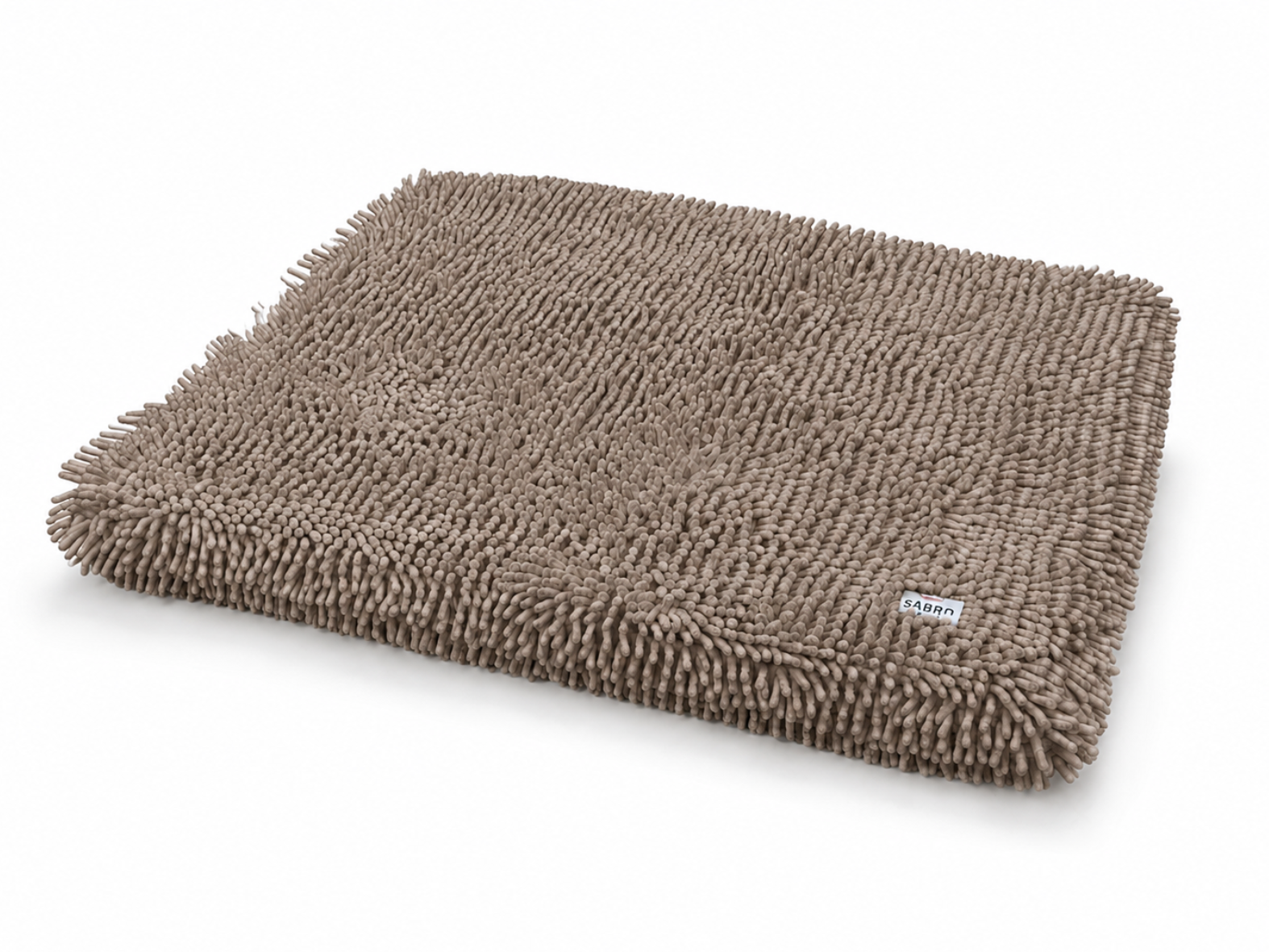
If you can't avoid bathing, it's important that you equip your bathtub or shower stall with a non-slip mat so that your dog has a grip on the slippery floor and doesn't slip. Stay relaxed throughout the entire bathing process, talk to your dog, and don't get frantic. Once everything is done, treats as a reward have also proven successful with our dogs. Our dog snacks, which are easy to feed and available in many delicious flavors in our shop, have also proven popular.
Strictly speaking, bathing is more like showering
When your dog is in the bathtub or shower stall, start by wetting them from bottom to top, i.e., from their paws over their back to their head, with pre-warmed water and a gentle spray from the showerhead. If you use shampoo, rinse them thoroughly afterward and dry them with an absorbent towel. You can find suitable products in our Dog Care & Health collection.
Important after bathing your dog:
After bathing or showering your dog, lift them out of the tub and let them shake vigorously, preferably in a large shower stall. Alternative tip: if you place a large towel over them beforehand, you'll have the least cleaning effort afterward. In summer, you can let them shake off and dry on the sunny patio. In winter, you must make sure that your dog is not in a draft after bathing and ideally lies near a heater while drying.
Dog bathrobe and blow-drying your dog after bathing: when, how, where?
Especially to prevent your dog from getting cold after bathing, using an absorbent dog bathrobe is recommended. The dog bathrobe also helps the fur dry faster and prevents a possible cold. Keep them occupied in this spot or give them some dog snacks to chew on so they don't leave the spot half-dry too quickly. Blow-drying is only necessary for very long-haired breeds: use the lowest setting and don't hold the hairdryer too close to the fur.
Professional tip for bathing your dog in winter: ideally, bathe your dog in the evening, as the skin needs longer to dry and regenerate its oil layer in the colder months.
Once they are completely dry, you can start grooming their fur with a good dog brush, because only then will nothing get matted or snag. You can find more about fur care in our article "Dog Fur Care: Tips for Caring for Every Dog's Fur."
Which shampoo is recommended for my dog?
Good to know: for most short-haired breeds, rinsing with pure water is sufficient. If that's not enough, here are our recommendations. It's important that you use a special dog shampoo for your dog.
Never use your human shampoo for your furry friend!
At best, the smell will only confuse your dog and overpower their own scent, causing your dog to roll around during the next walk to get rid of the smell – counterproductive after bathing. At worst, your shampoo contains ingredients that are not good for your dog at all and attack their natural skin acid mantle. You'll notice this if your dog scratches, their skin is red, or even dries out.
Tip: use shampooing during bathing for a little massage for your dog
And when rinsing, be sure that the shampoo doesn't get into their eyes or ears, because even the mildest dog shampoo can be uncomfortable there or lead to inflammation.
Your dog shampoo should definitely not contain these ingredients:
- Fragrances
- pH value below 7.4
- Sodium lauryl
- Phthalates
- Musk
- Formaldehyde
At SABRO, we use a special, very mild and sensitive dog shampoo for our dogs when bathing, regardless of whether they are short-haired or long-haired. This is exactly why we also offer it in our shop.
What ritual do you have with your dog when bathing? Does your dog like to bathe or do you have to persuade them? We look forward to hearing about your experiences with bathing your dog.