
Arthrosis is an immense burden not only for dogs but also for their owners: the entire daily routine is suddenly different. And in the back of their minds, many dog owners are tormented by the question of how best to help their four-legged friend, alleviate their pain, and make their life as comfortable as possible. Because in addition to joint pain, arthrosis can also lead to abdominal pain and pressure pain in your dog. And your dog's sleeping position is also an important factor if they suffer from arthrosis.
Are you also one of those dog people who only want the best for their darling? Has your vet diagnosed your dog with "degenerative joint disease" or do you want to prevent possible arthrosis? Then join us on an exciting journey: Learn about the symptoms, natural therapy options, naturopathic remedies for pain relief, and preventive measures.
Arthrosis in dogs? What exactly is it?
Before we look at the symptoms, pain relief options, and preventive measures, it's worth taking a comprehensive look at the causes of arthrosis. Perhaps your vet has already explained to you that arthrosis is a so-called degenerative joint disease. This involves the breakdown of joint fluid and joint cartilage. Healthy joints consist of joint cartilage as a "shock absorber" and protective joint fluid. The joint fluid acts like a natural lubricant that surrounds the joint cartilage. In arthrosis, enzymes that break down the joint cartilage are increasingly formed. This creates fissures in the cartilage mass, releasing individual pieces of cartilage into the joint. This results in inflammatory processes, which in turn contribute to the formation of degrading enzymes. The wear and tear is then additionally promoted by the breakdown of joint fluid. Due to the breakdown of cartilage, the body produces less of this protective substance. You can certainly imagine the pain your dog experiences as a result.
How to recognize arthrosis in your dog
Unlike humans, dogs are not born to complain. Therefore, the disease often remains undetected by the owner for a long time. Only when the dog is already suffering from massive pain do we dog people realize that our darling is suffering from a joint disease. You can recognize whether your four-legged friend may be affected by arthrosis by the following symptoms:
✓ Does your dog have a stiff and stilted gait?
✓ Does he often adopt a protective posture?
✓ Does your darling frequently gnaw at his paws/a joint?
✓ Does he have difficulty sitting/lying down?
✓ Does he have difficulty getting up after long periods of rest?
✓ Do his starting difficulties disappear after prolonged exercise?
✓ Does he no longer jump into the car, onto the couch, into bed?
✓ Does he no longer enjoy running as much?
✓ Does he have problems climbing stairs?
✓ Is your dog exhausted more quickly and stops more often during walks or even sits down?
✓ Does your dog change his sleeping position more often when sleeping?
✓ Are the joints swollen or particularly warm?
✓ Do his symptoms worsen in cold and wet weather (e.g., in autumn/winter)?
Important to know: The symptom list does not replace a diagnosis by a vet. It only serves as a first indication. Other causes can also underlie the mentioned symptoms. Therefore, in case of doubt, always present your darling to your trusted vet or animal naturopath.
How does arthrosis occur in dogs?
First of all: The question cannot be answered generally. There is not just one cause, but rather a variety of aspects that can lead to this degenerative joint disease. There are two forms of arthrosis:
Primary arthrosis is due to age-related wear and tear. Especially dogs that are very active in sports are at risk of suffering from this chronic joint disease in old age.
In secondary arthrosis, several causes come into consideration, such as:
- Untreated joint inflammation (arthritis)
- Old fractures
- Obesity
- Inherited joint anomalies
- Diet too high in protein in puppyhood
- Nutrient deficiencies
Healthy nutrition and supplements for arthrosis in dogs
Nutrition plays an underestimated role both in prevention and within therapy options. Since dogs with arthrosis suffer from chronic inflammation in the affected joints, the owner should avoid feeding grains as much as possible. Conventional grains can trigger so-called silent inflammation in the body and not only massively damage the intestines. If you don't want to withhold carbohydrates from your dog, you can switch to gluten-free pseudo-grains such as quinoa, millet, and co. Important: if your dog suffers from allergies or intolerances, discuss the dietary change with your vet first.
Paracelsus already knew that health always begins in the gut. This also applies to dogs with arthrosis. Therefore, owners should always pay attention to good gut health, supply it with healthy microorganisms, and regularly excrete toxins. For example, cures with peat extract, bentonite, or zeolite are suitable for this. Important: please remember that these must be taken at a different time than any tablets, so that the active ingredients are not accidentally excreted with them.
Omega 3 should never be missing from the diet of an arthrosis patient and for prevention. It can relieve inflammation and pain. Additives such as MSM, chondroitin, and glucosamine have also proven effective in therapy. These are natural dietary supplements that your dog's body partly produces itself. You can get these nutrients from your vet or in special online shops.
Natural remedies for pain relief from arthrosis in dogs: pay attention to the sleeping position when in pain
In addition to prescription painkillers from the vet, more and more dog owners are using natural remedies for pain relief. Especially CBD oil seems to be a sensible therapy option here. The herbal remedy not only contributes to pain relief but also has anti-inflammatory effects. The natural product from hemp does not contain THC, so it is not addictive. Important: CBD binds to pain receptors in the brain and should therefore never be used together with chemical painkillers, as these can otherwise accumulate in your dog's body and lead to poisoning.
Who rests, rusts: Dogs with arthrosis need a healthy amount of exercise
Especially the topic of exercise can present some owners of arthrosis dogs with real challenges in everyday life. After all, nobody likes to see their darling suffer. Your dog should not suffer at all - but he needs regular exercise to maintain his mobility and muscles. Only then can enough joint fluid be formed to protect the joint and joint cartilage.
How much exercise is recommended for dogs with arthrosis?
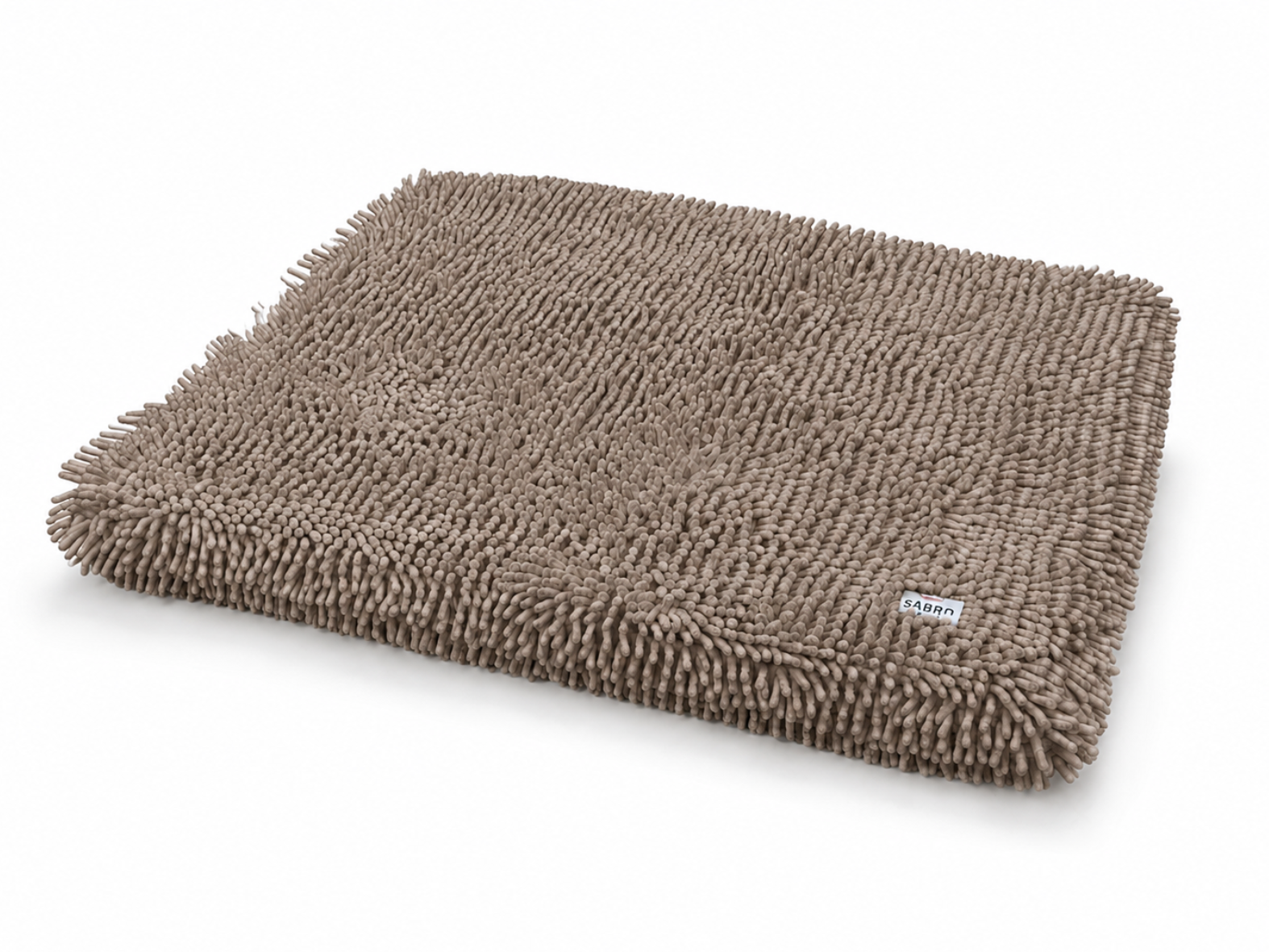
Unfortunately, we cannot give you a general recommendation at this point, because every dog is unique. It's best to plan your daily walks so that you can always go back. Also, take a shared break in between on a cozy dog mat that protects you from cold ground and moisture. This is not only good for your dog but also for you.
Make the breaks a highlight for your four-legged friend by having a small picnic. A few small snacks and some water will quickly make him forget the pain in his musculoskeletal system for a moment. You can comfortably transport your outdoor mat, water bottles, snacks, and much more in a light and comfortable backpack.
Always pay attention to your darling's signs during the walk. He will show you when he would rather go back. For many dogs, it is frustrating when they can no longer do what they like. Therefore, it is better to take several small walks a day instead of one long one.
Even if the weather is not always inviting and your four-legged friend's pain may worsen in wet/cold conditions, dogs with arthrosis need enough exercise every day. Especially in rain, snow, wind or cold, comfortable dog clothing, such as winter or rain coats, is suitable to protect your dog's muscles, joints and musculoskeletal system as best as possible. The coat should always be waterproof and at the same time temperature-regulating, so that your furry friend is neither too warm nor too cold. Our KAPPA dog coat is the optimal companion.
If the rain caught you by surprise and your four-legged friend wasn't wearing a protective coat, you should definitely dry him off or wrap him in a cozy bathrobe.
Physiotherapy for dogs with arthrosis: how pain can be relieved and mobility maintained
Targeted muscle building is extremely important, especially for dogs with arthrosis, to relieve the joints, but it can also make a valuable contribution to prevention. Regular physiotherapy can not only help maintain mobility but also relieve pain. When our furry friends experience pain in the musculoskeletal system, they often adopt a protective posture to avoid painful stresses. However, this results in additional tension, which sooner or later can lead to wear and tear on the musculoskeletal system. Physiotherapy loosens the entire musculature and strengthens mobility sustainably. The therapy options are diverse and range from targeted exercises to massaging tense muscles.
Careful dog owners can also integrate exercises to maintain mobility into their daily routine themselves. Above all, passive movement exercises are easy to perform and additionally strengthen the relationship between dog and owner. In this type of movement, the dog owner is challenged.
Movement exercises for your dog plagued by arthrosis and pain & you – here's how:
Your dog should stand on a non-slip surface during the exercise. Sit next to your furry friend and gently grasp a joint on the front leg and lift it slightly. What sounds simple is literally packed with meaning. Your four-legged friend must now maintain his balance and thereby trains his muscles. Perform this exercise alternately with all four legs. For starters, five seconds per paw joint are sufficient. Over time, you can increase to 20 seconds per leg. If your dog has difficulties with the exercise, you can also gently support him under his belly.
Dog tired: what sleeping position is recommended for your dog to relieve pain?
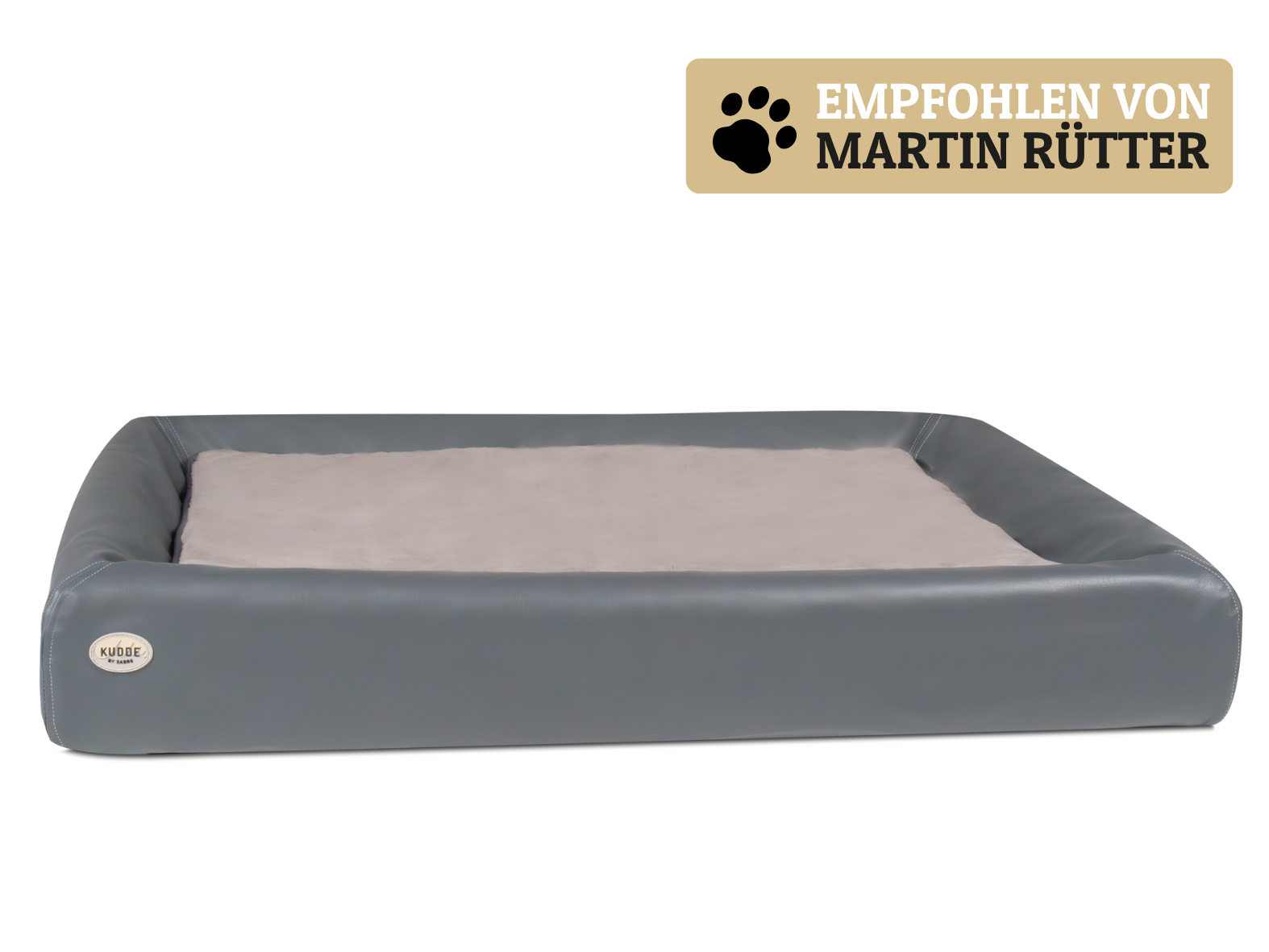
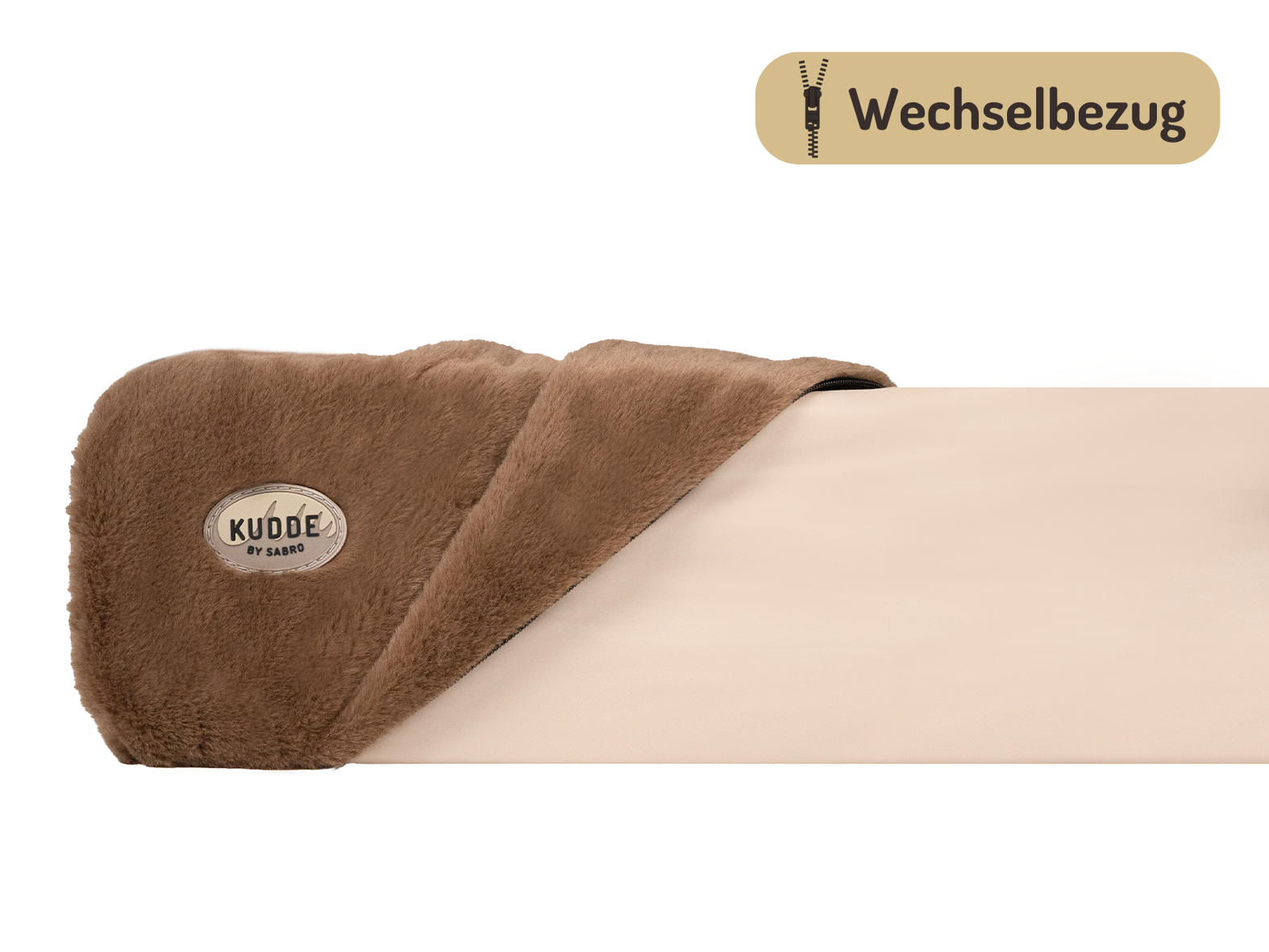
How do you like to lie when you're in pain? On a worn-out mattress or rather comfortably and with as little pressure as possible? That's right, in the daily life of a dog with arthrosis, a suitable dog bed plays a decisive role and represents an important pillar among therapy and prevention options. Because a relaxed lying position can relieve your dog's pain if he suffers from arthrosis. If your four-legged friend lies absolutely pressure-relieved and comfortably, you can also significantly counteract muscle atrophy and thus at the same time contribute to pain relief in the joints. Ideally, you choose a dog bed with an orthopedic lying surface and a rim so that your furry friend can relax undisturbed and find a pain-free lying position. Our bestseller KUDDE incidentally meets all criteria to optimally support dogs with joint disease and can also prevent this disease naturally.
Is your dog plagued by arthrosis? Does he have pain when lying down and can't find the right position? What experiences have you had? Tell us in the comments.